Tree service across College Station & the Brazos Valley(979) 978-0490   ·   office@collegestationtreeservices.com
About

About College Station Tree Services

A College Station-focused tree-service resource and request line for homeowners, property managers, landlords, and commercial properties across the Brazos Valley.

Clear scopes make tree work easier to compare

College Station Tree Services is built around a simple idea: tree work should be described in enough detail that a property owner can compare estimates on the same scope. A mature oak over a roof, a storm-broken limb over a driveway, a stump beside an irrigation valve, and a row of commercial trees along a parking lot may all be called “tree service,” but they are very different jobs.

Requests are organized around removal, pruning, stump grinding, emergency work, storm cleanup, commercial tree care, planting, and structural support. The service area centers on College Station and Bryan and extends to practical nearby Brazos Valley communities.

Brazos Valley conditions belong in the conversation

Generic national tree advice misses several issues that matter here. College Station sits in the Post Oak Savannah, where post oak, blackjack oak, live oak, cedar elm, pecan, water oak, and other hardwoods are part of the local landscape. Heat and drought can weaken trees for years after a dry period. Severe storms and occasional ice can create broken or suspended limbs. Oak wilt changes when and how oak pruning should be approached.

Municipal rules matter too. College Station excludes contractor-generated waste from residential brush collection, while Bryan requires a right-of-way permit for certain work, including tree trimming, when the work affects public right-of-way. Those details can change the scope even when the tree itself has not changed.

What to expect when requesting an estimate

Share the property city, service needed, number of trees, what you are seeing, nearby structures or utilities, and access limitations. If the job is urgent, explain what is blocked or threatened. If cleanup matters, state whether you want all debris hauled or whether some wood can stay on site. Clear information helps define a clearer scope.

Confirm project-specific details before work begins

Availability, response time, cleanup, warranties, insurance, specialized qualifications, and other job terms can vary by scope and provider. Confirm the details that matter for your property in the written estimate before authorizing the work, especially for emergency, utility-adjacent, diagnostic, or other specialized tree care.
Ready to get the tree work scoped?

Tell us what is happening on your property

Send the job details online or call (979) 978-0490. Include the city, the number of trees, the problem you are seeing, and any access or structure concerns you already know about.

Before the estimate

Better details lead to a clearer tree-service scope

A short description can hide a very different job. “Remove one tree” might mean an open-yard removal with a clear drop zone, or a sectional dismantle over a roof with limited gate access and stump grinding afterward. The more specific the request, the easier it is for a provider to understand the likely crew, equipment, and cleanup needs.

Useful requests identify the city, number of trees, approximate size, visible damage or reason for service, nearby structures and utilities, access limitations, cleanup expectations, and whether stump work is part of the job. That information reduces back-and-forth and makes the first estimate conversation more productive.

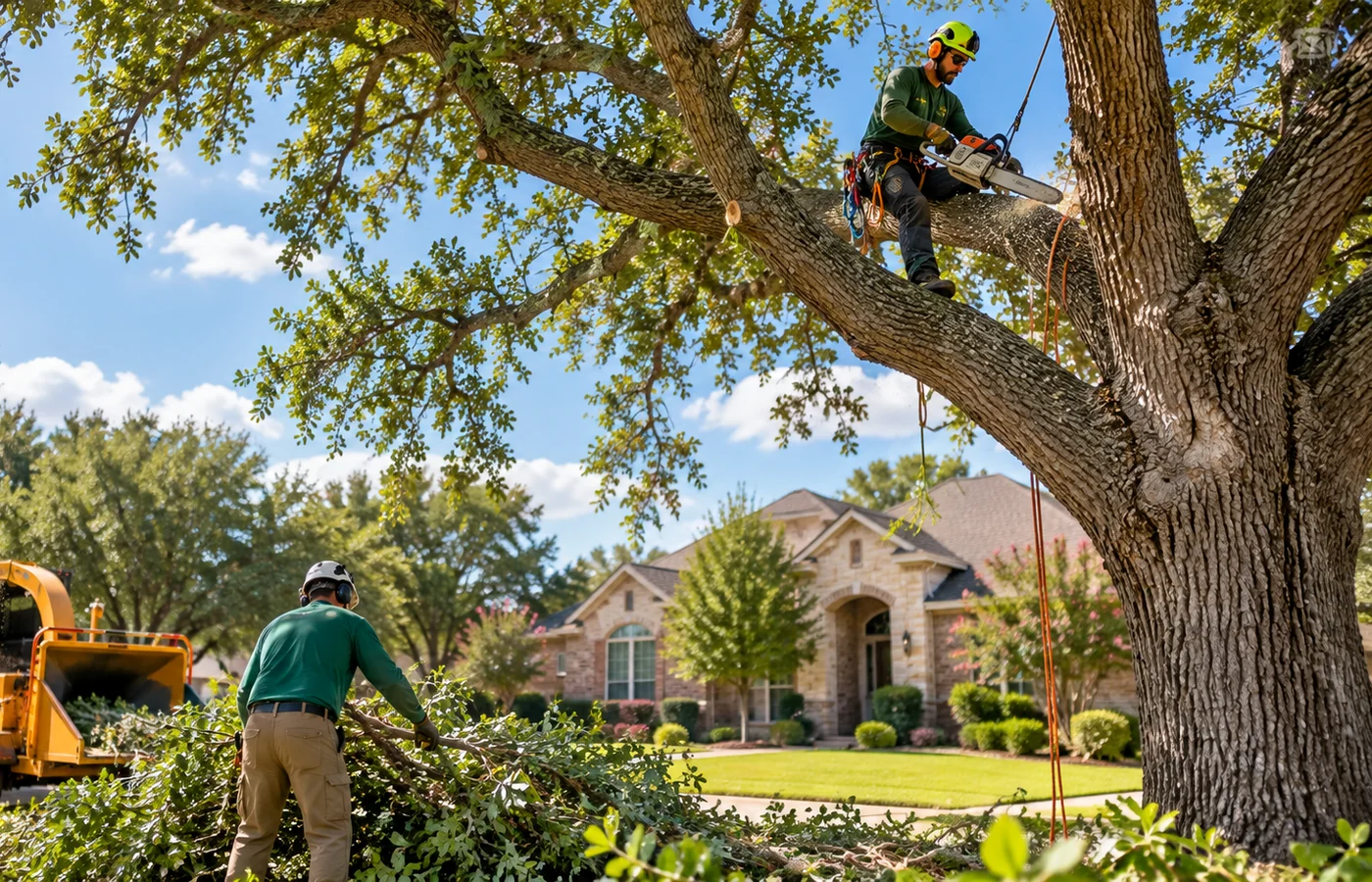
Representative tree-service crew and equipment
Local context

Tree work in the Brazos Valley has its own planning issues

Heat, drought, storms, and freeze damage

Central Texas trees can move through heat stress, dry periods, thunderstorm wind, and occasional freeze damage. Those stresses can expose weak unions, deadwood, or decline that changes whether pruning, monitoring, or removal is the right next step.

Oak pruning timing matters

Texas A&M Forest Service advises avoiding pruning or wounding oaks from February through June because of oak wilt risk and recommends immediately painting fresh oak wounds at any time of year.

Debris needs a real plan

College Station excludes contractor-generated waste from household brush collection. Professional tree work should therefore spell out whether brush, logs, chips, and stump grindings are hauled, chipped, stacked, or left for the property owner.

Before work starts

Questions worth asking any tree-service provider

Scope

What exactly is being removed or pruned, and is stump work included?

Cleanup

Who handles brush, logs, chips, and final rake-up?

Property protection

How will roofs, fences, driveways, irrigation, landscaping, and access routes be protected?

Qualifications

For specialized diagnostics or structural support, what training or credentials does the assigned provider have?

Call (979) 978-0490