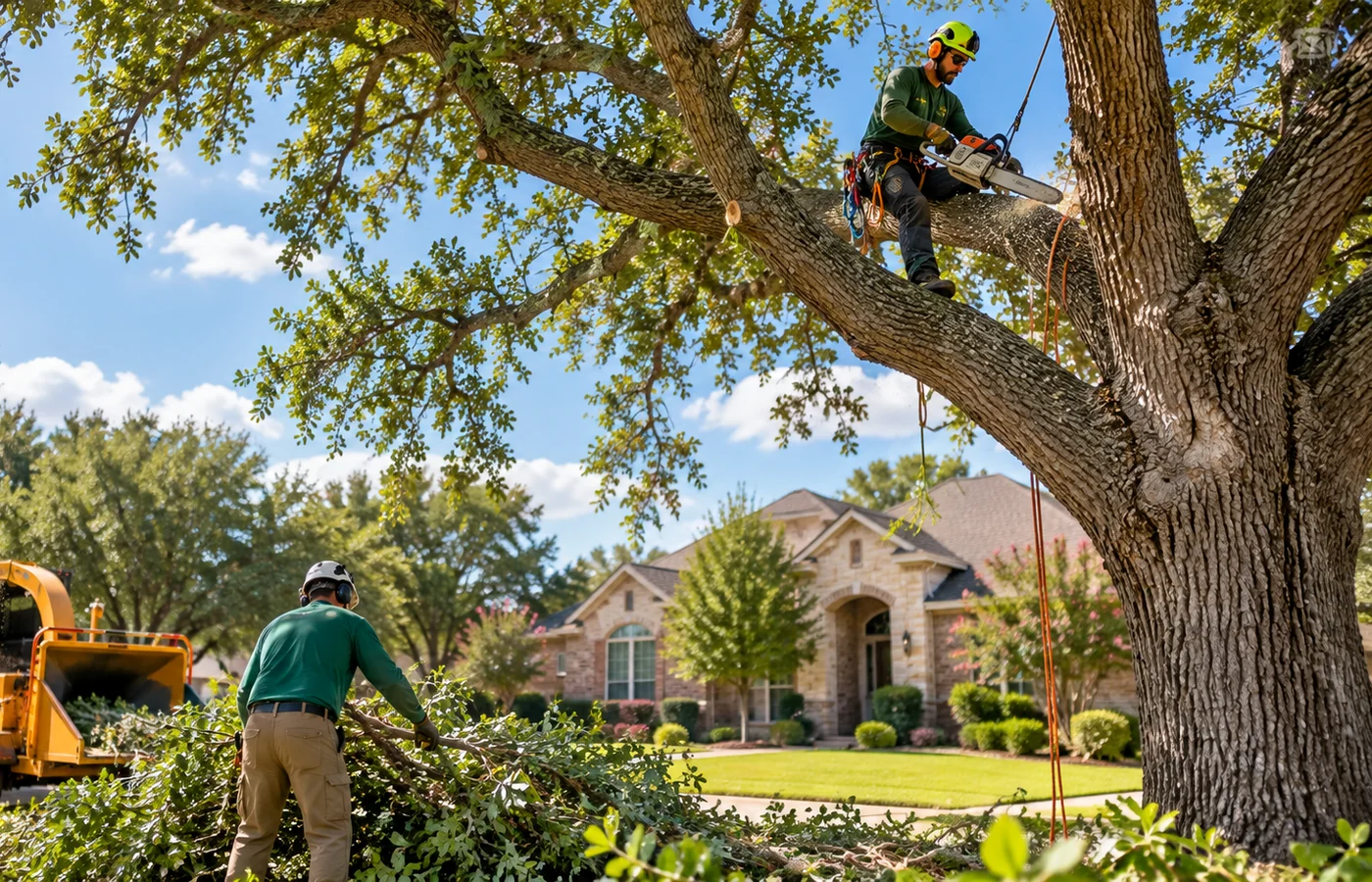
Tree work planned for Bryan properties
Bryan is the other half of the Bryan-College Station urban core, with established neighborhoods, commercial corridors, multifamily properties, older housing areas, and newer growth at the edges. Older neighborhoods can have mature trees close to roofs, driveways, sidewalks, and overhead utilities, while commercial and multifamily sites add parking and pedestrian-control considerations. Bryan also regulates certain work in the public right-of-way, including tree trimming, so location matters when limbs extend into municipal space.
About 10 minutes from central College Station. That keeps Bryan within a practical drive for scheduled tree work. Travel distance is only one part of scheduling, though. Gate width, driveway condition, equipment access, ground softness, parking, traffic, and the location of the trees on the parcel can all change how a job should be staged.
The best estimate starts with the actual property conditions. A mature tree next to a roof may require careful sectional work even if the backyard is large. A rural tree may have plenty of drop space but sit hundreds of feet from a firm equipment route. A stump may look easy until irrigation or utilities limit grinding depth. Describe those constraints early so the requested scope reflects the site instead of relying on a generic per-tree assumption.
Common tree-service needs around Bryan
Property owners request tree service for many reasons: dead or declining trees, heavy limbs over buildings or drives, storm damage, clearance from roofs and fences, leftover stumps, new planting, and routine pruning. The right service depends on whether the goal is to retain the tree, reduce a particular hazard, restore access, or remove the tree entirely.

Tree Removal
Controlled removal for dead, declining, storm-damaged, crowded, or unwanted trees.
Learn about tree removal →
Tree Trimming & Pruning
Pruning for clearance, structure, deadwood, storm damage, and healthier long-term growth.
Learn about tree trimming & pruning →
Stump Grinding
Stump reduction for cleaner yards, easier mowing, replanting, and construction clearance.
Learn about stump grinding →
Emergency Tree Service
Urgent help for fallen trees, hanging limbs, blocked access, and storm-created tree hazards.
Learn about emergency tree service →What makes tree work around Bryan different
Bryan brings together some of the oldest developed neighborhoods in the Brazos Valley, historic districts, established residential streets, commercial corridors, and fast-growing newer development. Older properties can have mature shade trees close to roofs, sidewalks, fences, service drops, and narrow driveways, while newer subdivisions may have younger planted trees with smaller root zones and construction-related stress. The City of Bryan also lists tree trimming among activities covered by its Type A right-of-way permit when work occupies or affects public right-of-way.
Across the broader Brazos Valley, heat, drought, thunderstorm wind, and occasional freeze damage can all create deadwood, canopy thinning, cracked unions, and storm-broken limbs. Oaks also carry a regional disease consideration: Texas A&M Forest Service recommends avoiding unnecessary oak pruning from February through June and painting fresh oak wounds immediately.
Access and debris can change the job
Ask how brush, logs, chips, and stump grindings will be handled. On small lots, debris may need to be processed quickly to keep drives and walks open. On acreage, owners may prefer to keep logs or chips. In College Station itself, contractor-generated waste is excluded from the household brush program, which is a useful reminder not to assume municipal pickup will solve professional tree-work debris in every community. Local disposal rules can vary, so the estimate should state the cleanup plan.
Before the work date, move vehicles, trailers, furniture, toys, hoses, portable planters, and other movable items out of the work zone. Point out private irrigation, landscape lighting, invisible fencing, septic components, or other features the crew may not be able to see. Those small details can prevent unnecessary damage and make equipment movement more efficient.
What a useful estimate should identify
A useful written scope should identify the tree or work area, explain whether the objective is removal, pruning, stump grinding, cleanup, planting, or support, and state what happens to debris. It should also account for access and notable targets such as roofs, fences, pools, parking areas, signs, and neighboring property. For specialized or higher-risk work, ask about the provider's insurance and qualifications before authorizing the job.
If multiple trees are involved, prioritize them. A dead tree over a driveway, a broken leader over a roof, and a cosmetic pruning request do not carry the same urgency. Phasing the work can make sense when a property has many trees or when seasonal oak-pruning considerations affect timing.
Nearby service areas
Frequently asked questions
Do you provide tree service in Bryan, TX?
Yes. Bryan is included in the service area. About 10 minutes from central College Station.
What tree services can I request?
Requests can include tree removal, trimming and pruning, stump grinding, emergency tree service, storm cleanup, commercial tree work, tree planting, and cabling or bracing. Specialized capability should be confirmed before work is approved.
What information should I include in the request?
Include the property location, the number of trees, the problem you see, nearby structures or utilities, access limitations, and any cleanup or stump preferences.
How is tree work priced?
The scope depends on tree size and condition, access, proximity to structures and utilities, rigging or equipment needs, debris handling, stump work, and travel.
Can I request service for acreage or a rural property?
Yes. Larger properties should mention gate widths, road conditions, soft ground, septic areas, fences, livestock considerations, and how far the trees are from a usable access route.
What if the tree is touching a power line?
Stay away and contact the electric utility or emergency authorities. Trees involved with energized lines should not be approached or cut by the property owner.